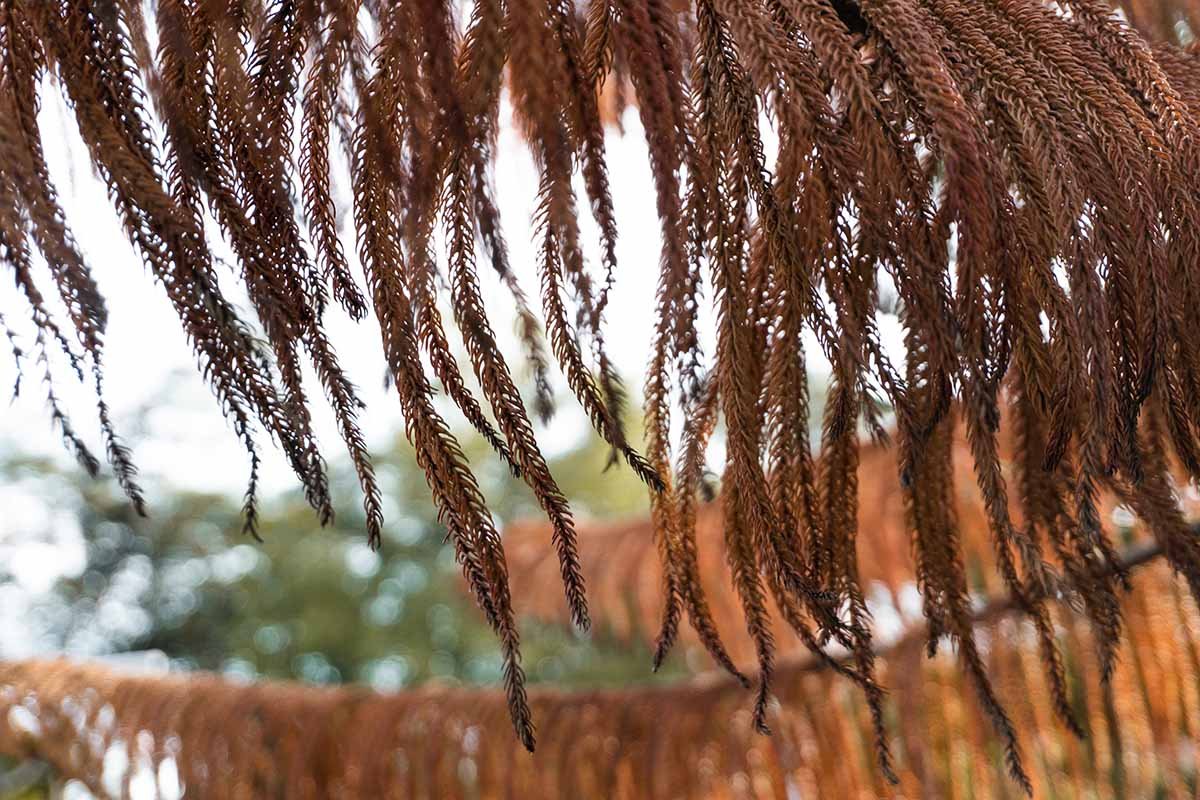
Tallest Ghosts in the Neighborhood
They’re still standing. All of them. Frozen, Forgotten and 40 Feet Tall. Completely dead, going absolutely nowhere.
If you live in Central Florida, you know exactly what I’m talking about. You drove past one this morning. Maybe you have one in your own yard, looming over the roofline like a bad decision you’re not quite ready to deal with.
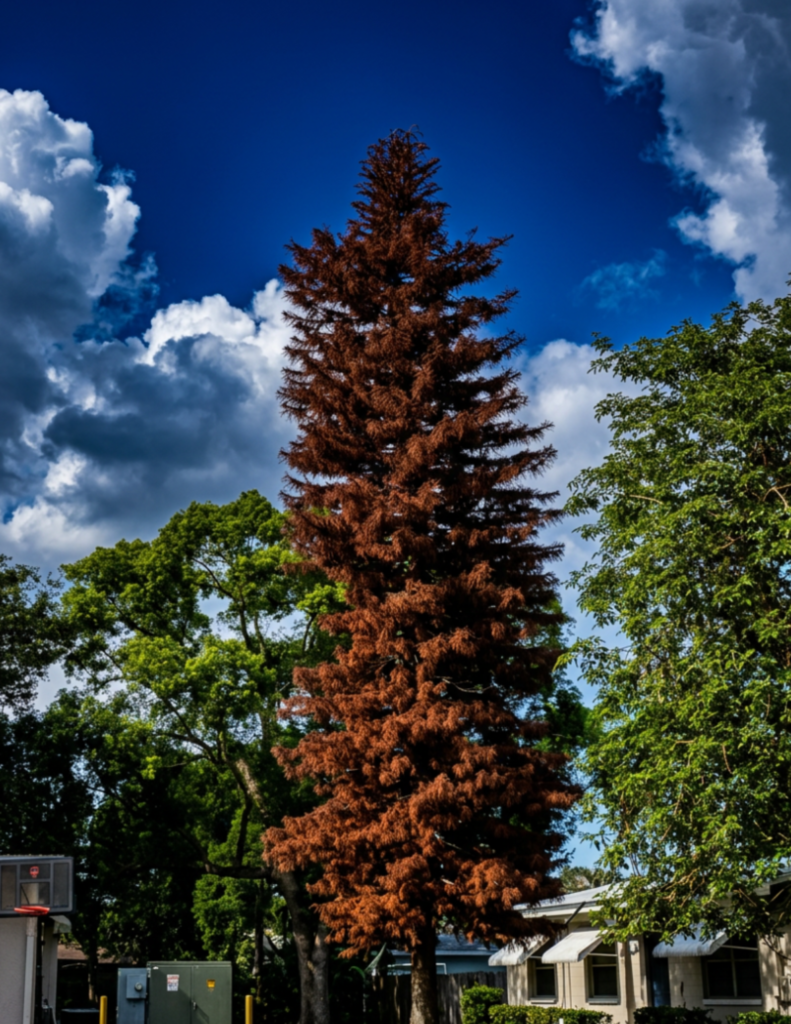
It’s that enormous brown skeleton that used to be a Norfolk Island pine — proud, architectural, aggressively tropical — and now it’s just… standing there. Waiting. Being dead at you.
The January freeze took them. A week of sustained cold that Central Florida is not built for and neither, it turns out, are Norfolk pines. Overnight lows in the twenties are the kind of thing our region treats as a novelty — a reason to post photos of frost on windshields and make soup — not a serious arborist situation.
And then we woke up and half the statement trees in the neighborhood had turned the color of rust.
Here’s the thing about a dead Norfolk pine: you can’t just deal with it on a Saturday with a saw and some optimism. These trees don’t go quietly. A mature Norfolk can hit thirty, forty, even fifty feet.
The canopy spreads wide. The wood is dense. Getting one down requires a certified arborist, a bucket truck, and depending on location, possibly a crane — and the quotes homeowners are receiving right now range from $1,500 to upwards of $3,000. Per tree.
As one youtuber who took it upon himself do perform the work himself, “It took FOUR, 6 HOUR DAYS to get it cut down to the ground.” Yeah.
Which is why I will share a video of trained arborists over at Kevin’s Tree Service in Winter Park. Totally not going be responsible for anyone getting any ideas.
So the trees stay up. You look at a $2,500 quote and you think: it’s still standing. It’s not falling. I’ll deal with it. Maybe you reckon, “I mean technically…it’s not in our yard.”
And then your neighbor thinks the same thing. And their neighbor. And suddenly your whole street has developed this collective, unspoken agreement to simply coexist with the dead giants until someone blinks first or a strong enough storm makes the decision for everyone.
There’s something almost cinematic about it. Central Florida doesn’t have seasons the way other places do — no fall color, no dramatic snowfall, no moment when the landscape shifts and marks time passing.
But right now, if you know what you’re looking for, the dead Norfolks are doing that. They’re the freeze’s signature. Evidence. A whole neighborhood’s worth of towers saying: something happened here this winter. Something real.
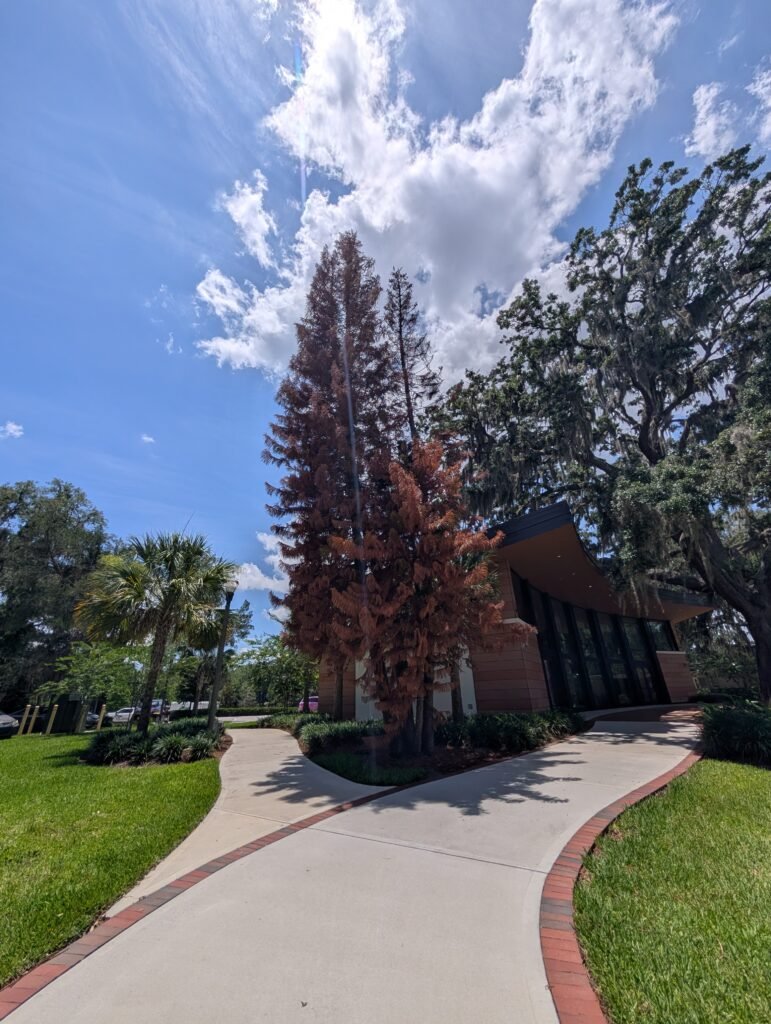
Florida has a way of making you forget that it has weather. Real weather. The kind that can change what your street looks like, permanently, in the span of a week. These trees are a reminder that this place — for all its sunshine and warm pavement and impossibly lush January greenery — can still catch you off guard.
They’ll come down eventually. One by one, when the budget allows or the anxiety gets loud enough. And then someone will plant something new in the gap — probably a sabal palm, probably immediately — and the neighborhood will close back over like water and forget the ghost was ever there.
But right now, they’re still standing. And honestly? There’s something worth noticing in that. A neighborhood full of forty-foot monuments to one weird, cold week. A skyline that got rewritten overnight and hasn’t been corrected yet.
Florida will humble you. It just does it in ways you never quite see coming.
Peculiar Paradise is a Citrus Soul editorial series celebrating the only-in-Central-Florida moments that make this place unlike anywhere else.